API RP 1175-2026 Tightens MFL PIG Validation
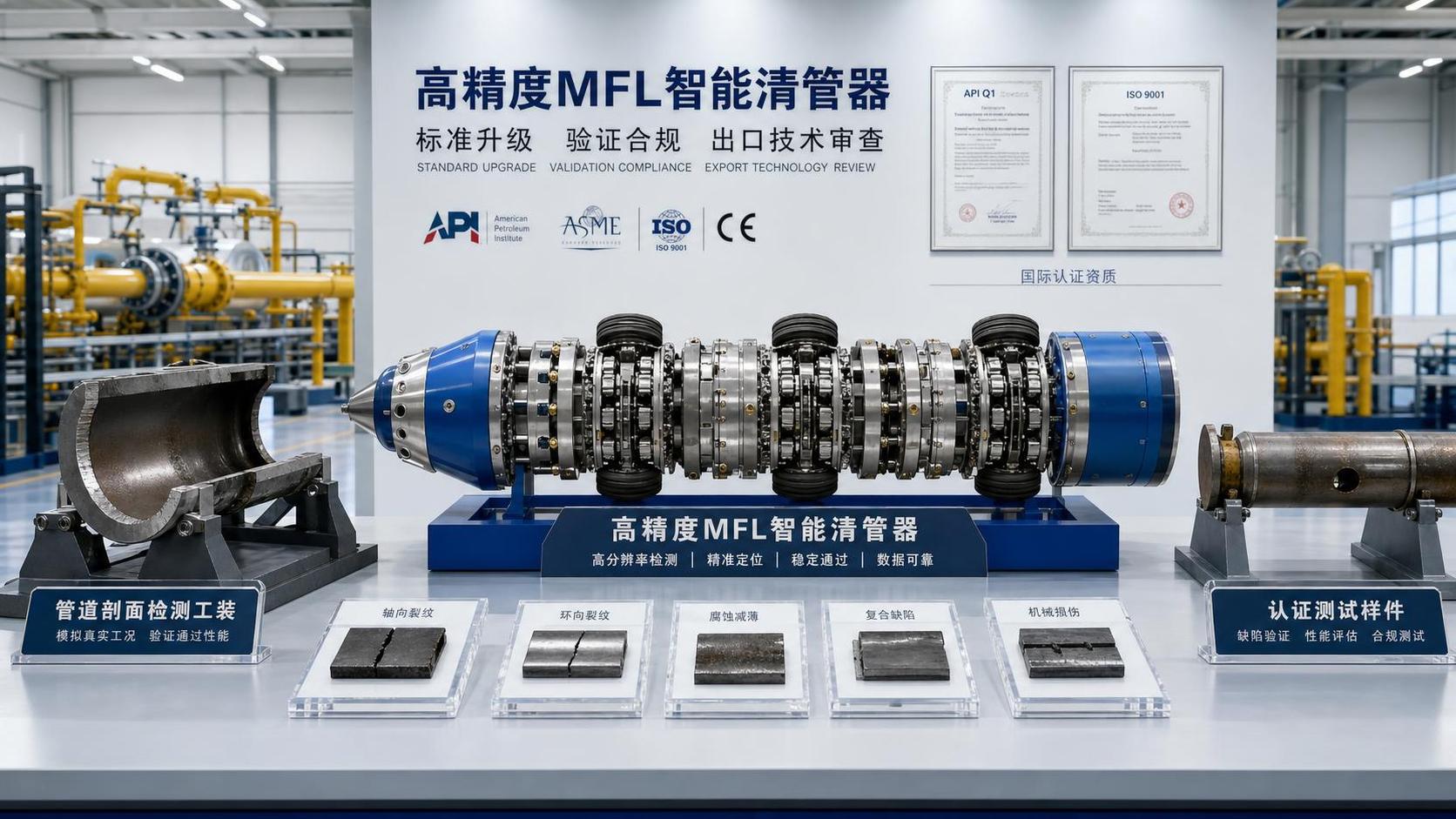
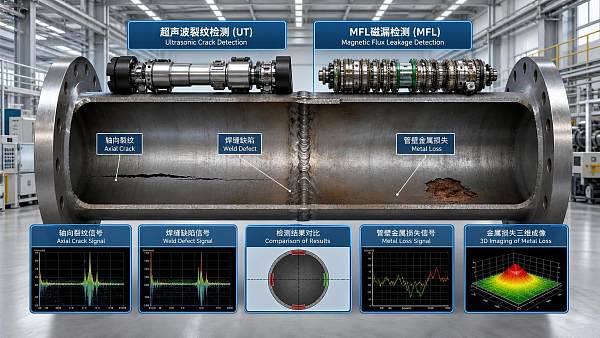
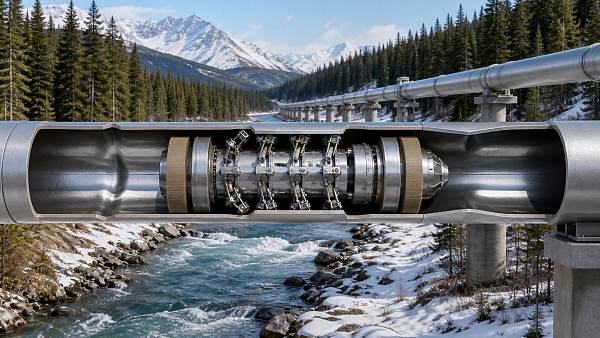
On July 28, 2026, API released API RP 1175-2026, introducing a stricter validation framework for High-Res MFL PIGs by bringing defect sizing accuracy and sub-millimeter axial positioning into mandatory verification. The change is relevant not only to pipeline operators, but also to equipment suppliers, EPC bidders, third-party testing bodies, and exporters whose technical documents and qualification routes may now face closer scrutiny. What deserves closer attention is that this is not simply a technical update; it affects how performance claims are documented, how procurement requirements are written, and how compliance is demonstrated in cross-border business.
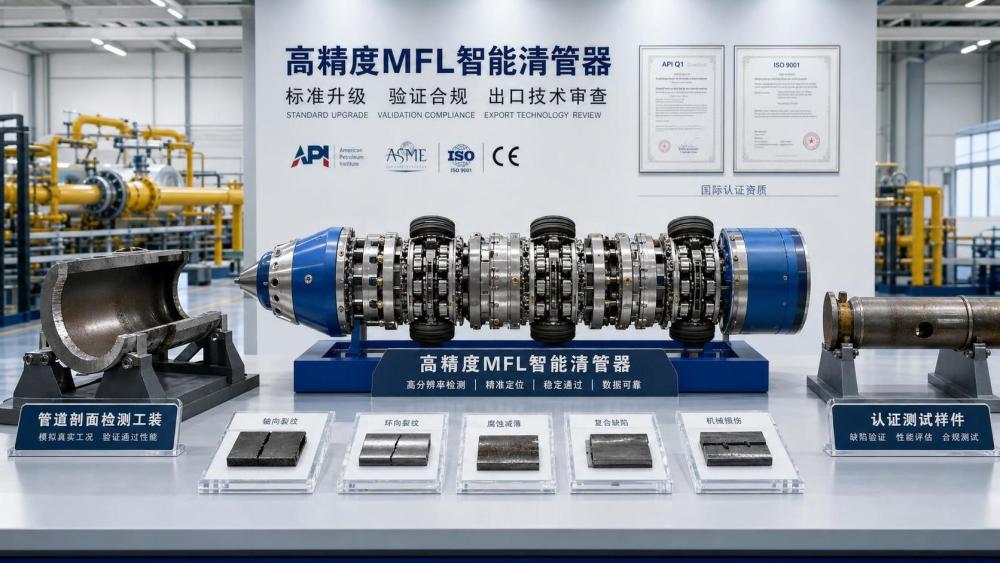
What the new release explicitly requires
The confirmed facts are limited but clear. API published the revised recommended practice API RP 1175-2026 on July 28, 2026. According to the provided summary, the new version for the first time places defect quantification accuracy for High-Res MFL PIGs within a mandatory validation framework, including recognition of wall-thickness loss at ±0.1 mm and sub-millimeter axial positioning. The same summary states that third-party laboratories involved in this validation are required to hold competence accreditation under ISO/IEC 17025. It also states that the revision directly affects global pipeline operators’ procurement specifications for intelligent pigs, the compliance position of EPC technical bids, and the export certification path for Chinese manufacturers.
Where the pressure is likely to appear first
Procurement specifications may become more demanding
From an industry perspective, pipeline operators and procurement teams are likely to be among the first affected because the revision directly touches the way intelligent pig performance is specified. The practical effect may appear in qualification language, acceptance criteria, and the supporting evidence required from vendors. Buyers will need to pay closer attention to whether defect sizing and positioning claims are backed by validation records that align with the new framework.
Technical bids in EPC projects may face tighter document checks
EPC contractors and bid teams may see the impact in technical bid alignment. Because the revision is tied to mandatory verification of measurement performance, technical offers may need clearer correspondence between tool capability statements, validation evidence, and project compliance language. Observably, the key issue is not only tool selection, but whether bid documentation can withstand review against updated specification expectations.
Testing and certification service providers move closer to the center
Third-party laboratories and certification-related service providers are also directly implicated by the stated ISO/IEC 17025 competence requirement. Analysis shows that the rule change may shift attention toward the status and acceptability of laboratory qualifications, the traceability of test results, and the consistency of reporting formats used to support procurement or export submissions.
Export-oriented manufacturers may need a different compliance path
For Chinese manufacturers targeting export markets, the stated impact on export certification paths suggests a more documentation-intensive route. What deserves closer attention is whether existing product claims, testing files, and qualification packages are sufficient under customer review once purchasers begin referencing the revised recommended practice more explicitly in tenders or supplier assessments.
What companies should review now
Check whether current validation evidence matches the new expectation
Analysis shows that manufacturers, suppliers, and bid teams should first review whether existing validation materials speak directly to the newly emphasized defect quantification accuracy and axial positioning requirements. If current files rely on broader performance descriptions without clear linkage to these points, that gap may become commercially relevant even before formal market practice settles.
Reassess the role of ISO/IEC 17025 in supporting documents
Companies using third-party laboratory data should examine whether the laboratory competence basis is clearly documented and suitable for customer or project review. This is not yet evidence of a uniform execution outcome across all projects, but it is a reasonable compliance checkpoint because the summary explicitly ties validation to ISO/IEC 17025-accredited laboratory capability.
Watch tender language and specification updates closely
It is more appropriate to understand this as a practical signal for procurement and bid documentation rather than as a completed market-wide transition. For that reason, suppliers and EPC participants should monitor how purchasers incorporate the revised practice into tender files, technical appendices, and prequalification requirements. The timing and strictness of adoption may depend on how those documents are updated.
Prepare for closer scrutiny in delivery and after-sales records
Observably, the rule change may also affect handover packages, inspection records, and later technical clarification during delivery or after-sales support. Where customers ask for proof of validation pedigree, companies may need more disciplined traceability across reports, certificates, and technical statements used in sales and execution stages.
How this change should be read at this stage
As an editorial observation, this development is best understood as a stronger execution signal rather than a fully visible end-state. The confirmed information already points to a meaningful shift: measurement accuracy claims for High-Res MFL PIGs are being drawn into mandatory validation, and laboratory competence is being tied to ISO/IEC 17025. At the same time, the provided information does not define the full market response, project-by-project enforcement practice, or the exact pace at which procurement language will change. That is why continued attention to certification interpretation, tender wording, and user-side implementation remains necessary.
Why the market is likely to keep watching
In practical terms, the revision matters because it links a technical performance issue to commercial qualification, bid compliance, and export documentation. The current signal is clear enough for operators, suppliers, laboratories, and exporters to review their document readiness, but it is still too early to treat every downstream consequence as settled fact. It is more appropriate to understand this development as an implemented rule change with follow-on execution details that still require observation through procurement practice, certification review, and industry feedback.
Basis of this article and what still needs verification
This article is based on the user-provided news title, event date, and event summary. For developments of this kind, relevant source categories typically include official releases, regulator notices, industry association publications, standards organization documents, trade or customs authority information, and reporting by established industry media. No specific official source link was provided in the input, so the exact official publication link still needs to be verified. Further observation is also needed on implementation details, certification interpretation, changes in tender documents, market feedback, and how companies execute against the revised requirement in practice.
Industry Briefing
Get the top 5 industry headlines delivered to your inbox every morning.
News Recommendations
 Girth Weld Quality: Acceptance Criteria and Inspection Controls for Pipeline ProjectsDr. Elias Vance
 Pipeline Leak Detection Methods: Choosing the Right System for Remote AssetsMs. Vivienne Cross
 How to Evaluate a Pipeline Integrity Management Platform for Multi-Asset Risk ControlMs. Vivienne Cross
 Pipeline Lifecycle Management in the USA: A Framework to Cut Integrity and Compliance RiskMs. Vivienne Cross
 Selecting High-Temperature Internal Pipe Coatings for Hot, Corrosive Process StreamsPolymer Coating & Thermal Scientist
 Pipeline Failure Prevention: How Risk-Based Integrity Plans Reduce Leaks and DowntimeMs. Vivienne Cross
 Ultrasonic Weld Testing for Pipeline Girth Welds: What to Verify Before AcceptanceDr. Elias Vance
 Selecting Mechanical Caliper Pigs for Dent and Ovality Surveys in Unpiggable PipelinesNDT Telemetry & Magnetic Flux Fellow
 Pipeline Defect Detection Methods: How to Match Inspection Technology to Defect TypeNDT Telemetry & Magnetic Flux Fellow
 Pipeline Electrochemistry Monitoring for Corrosion and Stray Current DetectionElectrochemistry & Corrosion Expert
 How to Select an Impressed Current Cathodic Protection System for Long PipelinesElectrochemistry & Corrosion Expert
 How to Qualify a Weld Quality Control Contractor for Pipeline ConstructionMs. Vivienne Cross
 Choosing a Pipeline Asset Management Company for Integrity Data and Lifecycle RiskMs. Vivienne Cross
 How to Select a Seawater Corrosion Protection System for Offshore StructuresElectrochemistry & Corrosion Expert
 What Drives Pipeline Engineering Cost? A Guide to Budgeting, Risk, and ROIMs. Vivienne Cross
 What Does Pipeline Defect Analysis Cost? Budgeting Inspection, Repair, and DowntimeMs. Vivienne Cross
 Steel Pipe Surface Preparation: Blast-Cleaning Grades for Coating AdhesionPolymer Coating & Thermal Scientist
 Selecting Pipeline Steel Grades for High-Pressure, Sour-Service Transmission LinesDr. Elias Vance
 Offshore Weld Quality Control: Acceptance Criteria for Subsea Pipeline JointsDr. Elias Vance
 Offshore Pipeline Corrosion Inspection: Methods for Managing Subsea Integrity RisksNDT Telemetry & Magnetic Flux Fellow
 When Should You Use Ultrasonic Pipeline Crack Detection Instead of MFL?NDT Telemetry & Magnetic Flux Fellow
 How to Select Pipeline Cleaning Pigs for Debris Removal, Batching, and DryingNDT Telemetry & Magnetic Flux Fellow
 How to Select Anode Cathodic Protection for Pipeline Projects in Nigeria?Electrochemistry & Corrosion Expert
 How to Evaluate a Reference Electrodes Supplier for CP Accuracy and Field ReliabilityElectrochemistry & Corrosion Expert
 How to Select Offshore Pipeline Coating Systems for Corrosion, Depth, and Service LifePolymer Coating & Thermal Scientist
 How to Evaluate a Pipe Coating Inspection Contractor for Pipeline QA CompliancePolymer Coating & Thermal Scientist
 What Are Geometry PIGs Used for in Canada’s Oil and Gas Pipelines?NDT Telemetry & Magnetic Flux Fellow
 Why API Spec 5L Pipeline Steel Coil Is Becoming a Smarter Starting Point for Pipe BuyersPipeline Structural Mechanics Architect
 How to Evaluate High Strength Pipeline Steel for Pressure, Toughness, and WeldabilityPipeline Structural Mechanics Architect
 Procurement Risks to Review When Sourcing Nickel-Based Alloys for ProjectsMs. Vivienne Cross
 How to Select Corrosion Resistant Coatings for Pipelines in Harsh Service ConditionsPolymer Coating & Thermal Scientist
 Stray Current Mitigation for Pipelines: How to Reduce Corrosion Risk Near DC SystemsElectrochemistry & Corrosion Expert
 U.S. Launches Third Sunset Review on Seamless Carbon and Alloy Steel Pipe From ChinaPipeline Structural Mechanics Architect
 Pipeline Coating Technology Cost: What Drives Price in Field Projects?Polymer Coating & Thermal Scientist
 China Releases API 5L and NACE MR0175 Compliance Guide for Oil and Gas Pipe ProcurementDr. Elias Vance
 How Ultrasonic Data Analytics Improves Pipeline Inspection Accuracy and Defect DetectionNDT Telemetry & Magnetic Flux Fellow
 China Imposes Temporary Export Ban on Helium, Tightening Calibration Gas Supply for Pipeline InspectionNDT Telemetry & Magnetic Flux Fellow
 What Does NACE MR0175 Certification Mean for Sour Service Material Selection?Dr. Elias Vance
 NACE MR0175/ISO 15156:2026 Raises Sour Service RequirementsDr. Elias Vance